31

Recently, I was contacted by an author with questions regarding our journal’s stylistic preference. Does JAR prefer non-linear layouts? Do we favor media players to auto-play when a page is opened? Do we like the first person singular? My answer to these questions was the one I usually give: ‘No, we don’t expect particular formal choices.
Read full editorial and browse issue

Performing with Sonic Tools. An approach to designing and analysing new instruments

Gaute Barlindhaug

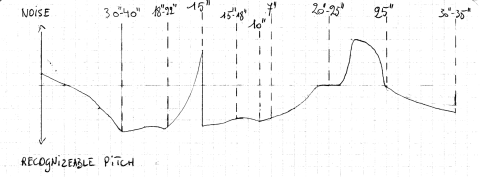
In recent decades, digital technology has accelerated the development of new musical instruments, not only establishing new techniques for creating sound but also enabling new performance practices. From the perspective of the performer, this has significantly broadened their possibility to express themselves, but through earlier experimentations it has become clear to me that audiences have problem comprehend such use of new musical instruments.

[...]
keywords:

Running Freight on the River. A Clean Cargo Prefiguration

Tim Boykett & Tina Auer

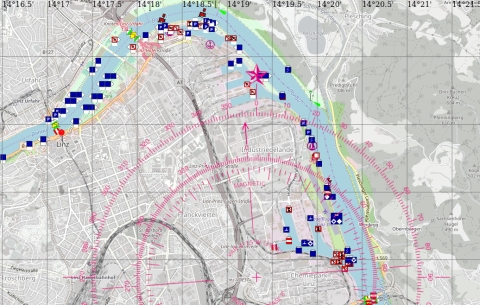
We are interested in exploring the types of futures that are preferable for us all. Discussions of preferable futures can be made difficult by a lack of understanding of the lived experience of that possible future. We like to think that some wise person once said: “I hear futures and I forget. I see futures and I remember. I do futures and I understand.” In order to explore scenarios of possible futures, we thus look into experiential modalities. This exposition examines our Danube Clean Cargo project.

[...]
keywords:

The Making of 'Commotion'

Sara Pinheiro

“Commotion” is a fixed media multichannel composition that revolved around the principles of minimalist music. This exposition aims at understanding these principles while it tries to place the process of composing the piece within the common premises of artistic research. Due to the nature of its context, this approach includes also theories of reception - mostly by exploring themes such as intentionality, interpretation and representation.

[...]
keywords:

TroublingGAN: generated visual ambiguity as a speculative alternative to photojournalism

Lenka Hámošová & Pavol Rusnák

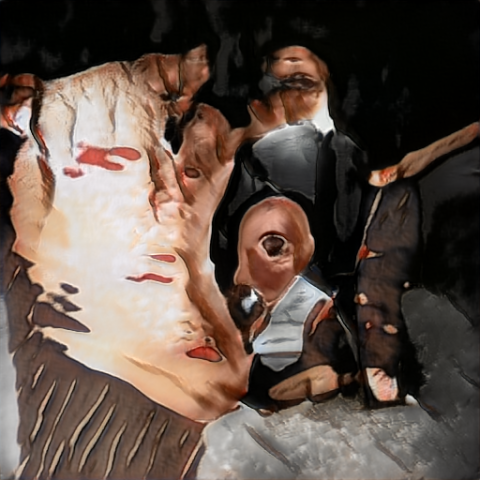
This exposition documents artistic research that engages with generative neural networks and artificial intelligence-driven visual synthesis, the goal being to challenge the limits of the research and question the value of the generated visual outcomes. We present here our experiment with a customised StyleGAN model. In contrast to its utilisation by computer scientists, it has been trained on a heterogeneous dataset, voluntarily exposing the generative neural network to failure while focusing on the unexpected moments of surprise that arise from such a process.

[...]
keywords:

[text]uring: writing through fashion for a new literacies dissertation

Rachel Kaminski Sanders

The term 'literacy' encompasses reading and writing practices, each with distinct meanings and histories. Scholars define individuals as 'literate' or 'illiterate' based on these practices, a point not to be taken lightly. New literacies studies have expanded literacy from print to encompass all forms of meaning-making, leading to an expansion of associated terminology. In American higher education, despite the expanded meanings of terms like 'writing' and 'text,' the term 'research' remains dominated by written language, even within dedicated disciplines (Coiro et al.

[...]
keywords:

30

Having remained virtually unchanged for many years, JAR recently updated the form that peer reviewers are given to record their reviews. Both forms, previous and new, consist of a set of questions – or prompts – leading up to a concluding section on desired or requested revisions, as well as an assessment scale.
Read full editorial and browse issue

CRITICAL CONFABULATIONS – Corresponding Practices and Mappings

Jim Harold & Alex Hale

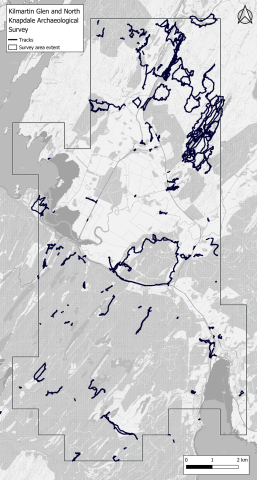
This exposition is based on an archaeological survey in the landscapes around Kilmartin Glen, Argyll and Bute, western Scotland, and references digital datasets – archaeological reference points –alongside the acts (enactments) of field walking, photography, drawing and poetry – experiences and representational discourses – to consider how land and landscapes may be read as dynamic palimpsestic and multi-dimensional fields of entanglement.

[...]
keywords:

Heterotopia of the Practice Room: Casting and Breaking the Illusion of Tristan Murail’s Tellur for Solo Guitar

Maarten Stragier

A combination of highly unusual extended playing techniques with open intabulated notation makes the solo guitar work Tellur altogether unique in Tristan Murail’s catalogue. When placed in the broader discursive context of Murail’s compositional philosophy, this unique configuration of elements causes a quandary. The composer aims to integrate “the totality of sonic phenomena” into his compositional language, and within this context he maintains a traditional view of musical authorship.

[...]
keywords:

La resistencia de las piedras

Alejandra Reyero & Maia Navas

La propuesta explora las potencialidades de la investigación crítica experimental, acudiendo a prácticas mediales - materiales de contramemoria frente a tecnologías de control históricas y contemporáneas. Se trata de un ensayo sobre restos de imágenes, sonidos y textos que formaron parte del proceso de investigación del cortometraje Enviado para falsear (Maia Navas - 2021).

[...]
keywords:

The Plane of Cicadas: On the Possibility of Making Kin through Musicking

Mathew Klotz

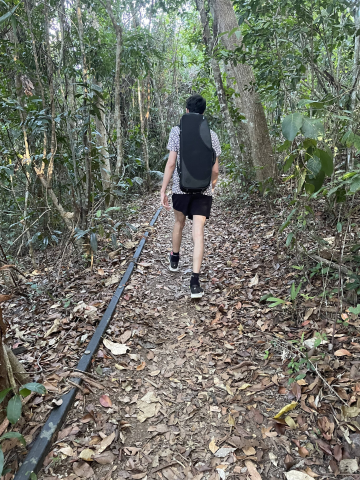
This autoethnographic exposition details a short series of musicking encounters aimed at making kin in a rainforest-covered mountain on unceded Djiru Country on the east coast of Australia. Each encounter consisted of a short hike and a discrete musical encounter with local subjectivities. The inquiry considers the place of the walking in the musicking, and my joint response-ability with my saxophone (or the ways in which we apprehend and respond to other subjectivities) in each encounter.

[...]
keywords:

We Are Public Space: Bodies and Minds in Post-pandemic Cities

Markéta Kinterová

The project aims to pay heightened attention to public spaces in cities on several levels. The first follows the trend of newly developed privately owned public spaces (known as POPS), which establish a precedent for how corporations and cities define public space and what they prioritize within it. A clear focus on people as consumers – rather than citizens – have several effects, including strict restrictions, the creation of societies of control (Deleuze 1992: 3), and various forms of often indirect exclusion of certain groups of inhabitants.

[...]
keywords:

29

Expositions are imaginary objects. Even when they are made physically, for instance, on the computer when preparing a submission to JAR, they only work when the elements making up what is assembled come together in a particular form. On its own, each element may offer numerous points of entry and meanings, but in a specific, expositional constellation it supports an image, understanding or sense, even, that can be quite different to what each element on its own can offer.
Read full editorial and browse issue

Building upon Ruins – Interweaving Metaphors

Joanna Magierecka

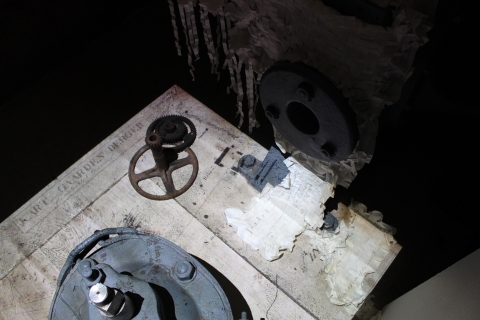
Does the complexity of a work of art, composed of diverging narratives, present a possibility to connect to what we do not grasp? In this exposition I present interweaving as a compositional technique and dramaturgical strategy, through aspects of the creative process connected to and elements of three installations – part of a series called Ruins. The installations combine different aspects of storytelling, participatory strategies, media, and forms of expression.

[...]
keywords:

Documenting Sounds in Urban Places: Belfast During Covid-19 Lockdowns 1 and 2

Georgios Varoutsos

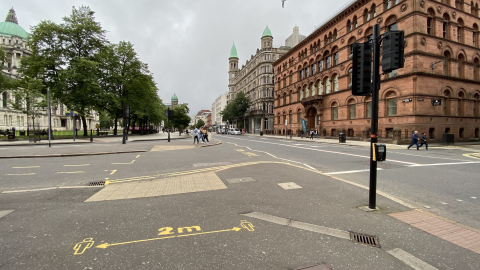
Government-regulated business closures, social distancing from people, and stay-at-home orders emptied the urban environment of the presence of people. This effectively created new sonic relationships between natural and urbanised sounds within our built society. As Covid-19 instilled a state of abandonment from our urban spaces with each variation of lockdowns, there was an opportunity to document these changes through a sonic-journalistic approach.

[...]
keywords:

Fractured Photography

Hilde Hovland Honerud and Jon Hovland Honerud

Is it possible to communicate through photography about people in distress? Through this exposition we approach such issues as media imagery and image fatigue, photography of ‘the other’, the privileged position, significant encounters, and reciprocity. We also show how commitment to social issues may relate to such an artistic process as both starting point and outcome.

[...]
keywords:

Object theatre exercises unfolding human-object relations in participatory design processes

Merja Ryöppy

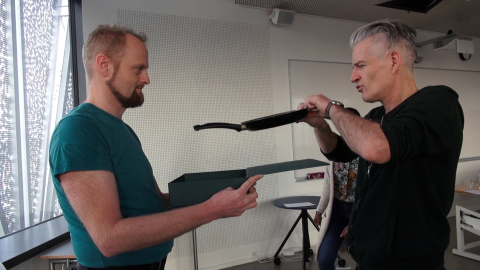
This research exposition presents practical object theatre exercises and investigates how these exercises may enhance the designer’s practice to work with objects in participatory design projects. The study was set up in a theatre-design laboratory in collaboration with researcher and lecturer Sean Myatt from Nottingham Trent University and an international cohort of three design graduates with multidisciplinary backgrounds in design, communication, and social work.

[...]
keywords:

On the Indeterminate Training Technologies of a Reconstructed Bauhaus Choreographer. A Research Practice Between Speculative Historiography, Architectural Invention, and Performative Co-enactment

Thomas Pearce

This exposition proposes a method of artistic research that uses (and disobediently misuses) techniques of reconstruction as a mode of performative, artistic, and architectural invention. Our speculative notion of reconstruction challenges inherited disciplinary notions of historiography and simultaneously functions as a propositional and generative tool. The exposition revolves around the discussion of a research and performance project entitled Jakob K., which reconstructs the works of fictional Bauhaus choreographer and gymnastics teacher Jakob Klenke (1874–1941).

[...]
keywords:

Story in motion: creative collaborations on Tłı̨chǫ lands

Adolfo Ruiz and Tony Rabesca

This exposition describes a creative collaboration in the self-governed Tłı̨chǫ region of Canada’s Northwest Territories. As part of this collaboration, Indigenous research methods and participatory experiences facilitated a process by which regional oral history was visualised and translated into animation. As a long-term project, this research was based on relationships through which a non-Indigenous researcher was able to learn and exchange knowledge with elders and youth from the region.

[...]
keywords:

28

When JAR started out, we specifically wanted to bracket the question of what artistic research was, to allow for a more experimental space for articulations of practice as research, or expositions, as we call them. By now, some might argue, we have had time enough to conclude what counts and doesn’t count as artistic research, but still we stress that such definitions are not part of JAR’s remit or purpose.
Read full editorial and browse issue

A Performative Response to Sites of Surveillance: The Gorilla Park Project

Shauna Janssen, Katrina Jurjans, Eduardo Perez, christian scott

The key interlocutor for this project is Gorilla Park, an irregular shaped parcel of land located on a disused railway track, in a Montreal neighbourhood called Marconi-Alexandria, currently a rapidly gentrifying quarter of the city. The uneven development in this part of the city is, in part, due to the increasing presence of Big Data and Smart City start-up companies.

[...]
keywords:

A Topian Artistic Methodology

Kevin Walker

This exposition details a methodology for artistic research based on the book Utopia as Method by sociologist Ruth Levitas. It involves specific methods at three levels of analysis: archaeological, architectural, and ontological. Practical work is produced using archaeological and architectural methods, aimed at triangulating onto contemporary ontological issues. The term ‘topian’ was chosen in order to incorporate both utopian and dystopian perspectives — this term, from the Greek ‘topos’ meaning place, frames an artistic practice in relation to one or more sites of investigation.

[...]
keywords:

Cajón desastre: notas sobre una investigación artística desordenada

Paola Villanueva

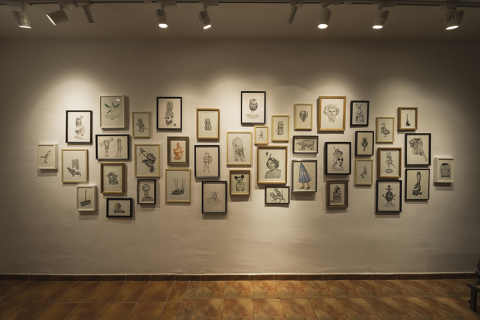
Este texto es una reflexión sobre Cajón desastre, una exposición que recogió alrededor de cincuenta dibujos realizados entre el 2011 y el 2020. Este texto, junto a la exposición, ensamblan una investigación artística desplegada en el tiempo y desarrollada en tres partes.

[...]
keywords:

Curating as Graphic Design Research

Sara De Bondt

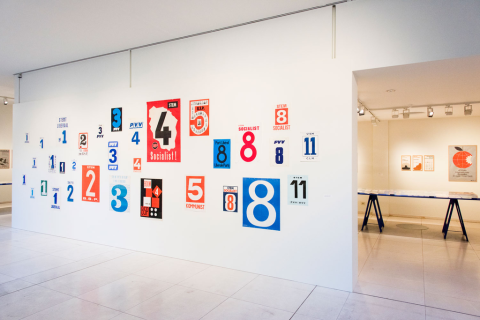
In 2019, I curated and designed Off the Grid, an exhibition on post-war Belgian graphic design at Design Museum Gent. The show included public events (Design Museum Gent, 2019–20) and led to a publication (De Bondt, 2022), all of which have been elements of my practice-based doctoral research at KASK School of Arts and Ghent University.

[...]
keywords:

Spotting A Tree From A Pixel (With Remote Sensing Researchers)

Sheung Yiu

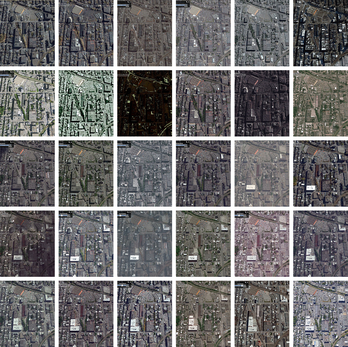
This exposition contemplates the collaboration between me, a photographer, and remote sensing researchers from the Department of Geoinformatics at Aalto University, in an ongoing artistic research collaboration called Ground Truth. Ground Truth is a photography project about ‘seeing something when there’s nothing there’.

[...]
keywords:

Structures for Freedom: In-performance Communication in Traditional Musicians in Scotland

Lori Watson

This exposition articulates tacit knowledge in processes associated with contemporary Traditional music practice in Scotland. Using a case study experiment and a series of workshop performances recorded in 2008, I examine the processes, communication and performance strengths of four leading Traditional and cross-genre creative musicians. In particular, examples of in-performance communication and collaboration emerge.

[...]
keywords:

27

The last few months saw a striking degree of debate around ruangrupa’s Documenta 15. While the public arguments mostly focussed on issues of anti-Semitism, curatorial responsibility and Documenta’s political and historical context, the outline of a problem very familiar to us here at Journal for Artistic Research has also emerged; how can the treacherous waters between artistic freedom and collective responsibility be navigated under conditions of increased specificity and multiplicity?

Read full editorial and browse issue

Biopoéticas: convergencias artísticas interespecie

Ana Laura Cantera

En la propuesta se reflexiona sobre las implicancias de concebir obras artísticas en conjunto con seres vivientes no-humanxs y las problemáticas y particularidades que esto conlleva. Asimismo, se propone la terminología de biopoética como alternativa nominal al concepto antropocéntrico y problemático del bioarte desde una concepción más locativa y contextual. Se pretende visualizar las metodologías y los accionares de la materia viva desde el arte contemporáneo latinoamericano y repensar tanto las prácticas como los modos de exhibición.

[...]
keywords:

Experiments in Aural Attention: Listening Away & Lingering Longer

Rebecca Collins

This exposition puts forward ‘lingering longer’ and ‘listening away’ as potential means to remain with non-semantic possibilities, resisting the tendency to know immediately or to classify — to get lost, albeit momentarily in a more messy moment of being. At stake in this investigation is the recognition that our experience of the world, characterized through a depth of engagement, is not limited to how relations operate on the surface.

[...]
keywords:

Little Do They Know

Olivia Rowland

This exposition functions as both a visual and poetic essay, and a manifesto for my methodology of ‘line’. My definition of ‘line’, defined here as: ‘The gestural and abstracting tandem force of drawing-and-writing as a narrative means to express selfhood.’ The exposition posits the methodology of ‘line’ as one alternate artistic means to artistically communicate feminine selfhood. The methodology of line works to resist the internalised assignment of feminine voice to a corporeal body. Instead, ‘line’ communicates selfhood through poetic means and a sense of fragmented corporeality.

[...]
keywords:

Pandemic performance: A Haunting of Haunts

Garrett Lynch IRL

During the COVID-19 pandemic that started in 2020, galleries, theatres, and performance venues closed in accordance with social distancing, lockdown, and confinement policies. Art practice, and in particular performance art, faced an existential crisis: adapt its form or cease to exist for audiences. To adapt, performance art adopted video on the internet as a means through which to perform posing immense challenges to its understanding of performance, liveness, and what is considered physical or ‘real’.

[...]
keywords:

Performing the ecstasis: An interpretation of Katharine Norman’s Making Place for instrument/s and electronics

Jean Penny

Katharine Normans’ work Making Place for instrument/s with live electronics (2013/16) combines recorded sounds, images, text, live interactive processing and instrumental music performance to create a unique experience of place. As the performer, I can choose a location, collect photographic images and recorded sounds, and interpret and re-create the score. The score is semi-improvisatory, consisting of many composed and freely pitched musical gestures which trigger text, visual animations and sound processing.

[...]
keywords:

Subtle Ground: Feeling our ways towards a supportive method in ceramic practice

Priska Falin, Helen Felcey

This exposition focuses on the exploration and development of Subtle Ground, a method that directs attention during and through making with clay, in the context of creative practices in ceramics. The method takes a non-conventional approach to making; it focuses on being with the material instead of pursuing a conclusion in the creative process. The method directs the practitioner to follow aesthetic qualities in making understood from a pragmatist view on having an experience.

[...]
keywords:

The application of creative practice as a means of disrupting or re-defining the dynamics of power in, with or for different communities

Sabrin Hasbun, Rachel Carney, Harry Matthews, Catherine Cartwright, Gareth Osborne, Julika Gittner, Agnes Villette

In this exposition, seven research practitioners investigate how creative practice can be applied as a form of knowledge production in order to disrupt or re-define the dynamics of power in a range of different contexts. These applications of creative practice take varied and complex forms, often transferring creativity from the practitioner-researcher to their participants, increasing participant agency or re-defining existing hierarchies, as they form, empower, and enlighten real and conceptual communities.

[...]
keywords: